
 flic.kr/p/2sh6My9
When visiting the ancient city of Gaur in Chapainawabganj, most travelers make their way to iconic landmarks such as the Choto Sona Mosque, Dakhil Darwaza, or Firoz Minar. Yet, a short distance away stands a comparatively quiet but historically significant structure—the Tahakhana, also known as Shah Shuja’s Tahakhana.
At first glance, it may appear to be a modest mosque. But its history, location, and architecture bear witness to an important chapter of Mughal Bengal.
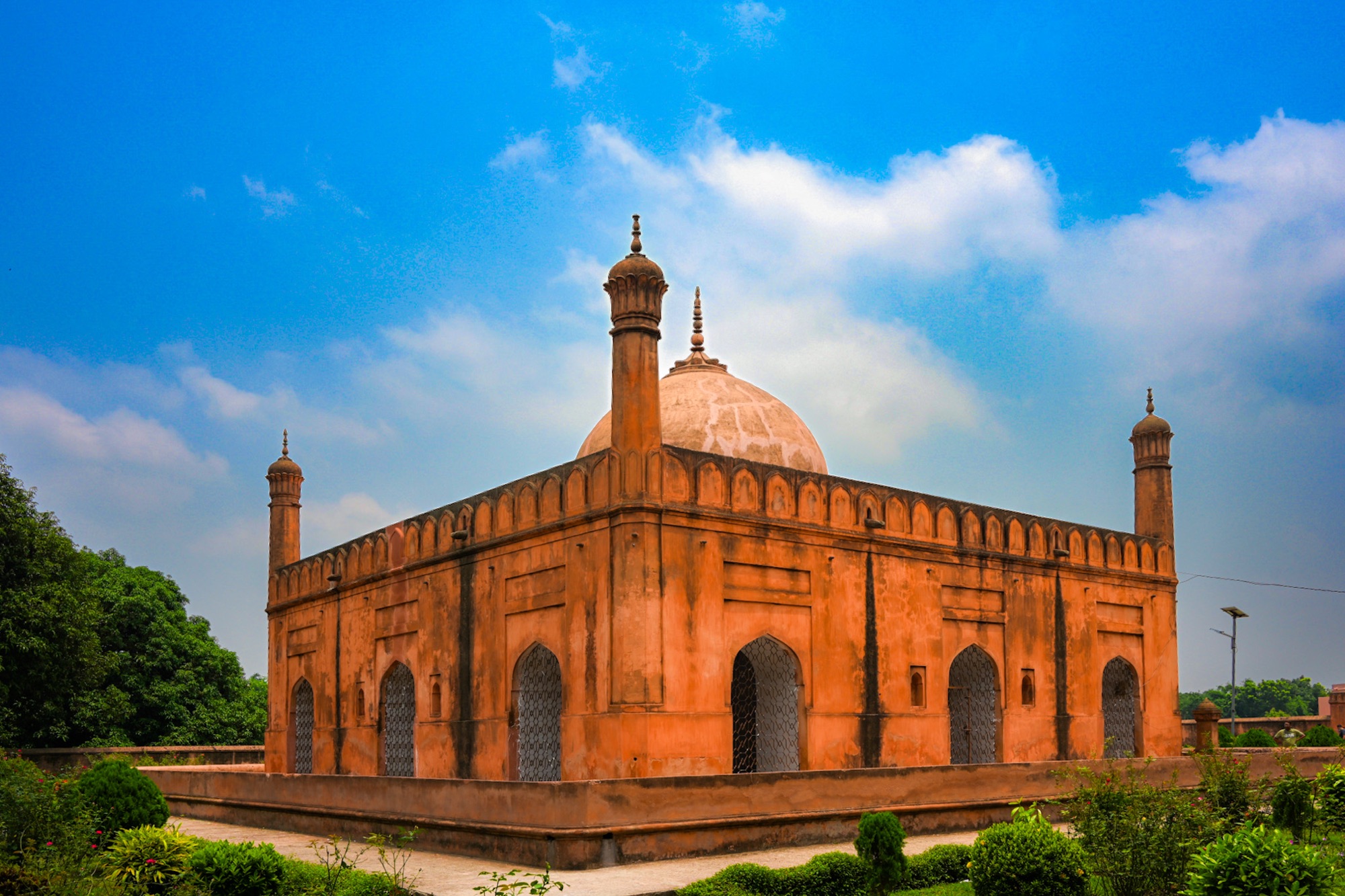
I arrived in Gaur around midday. The sun stood high overhead, illuminating the landscape with clarity rather than drama. Looking at the Tahakhana in that light, the first impression was one of stillness and silence. Standing for more than four centuries, the structure possesses no grand theatricality. Instead, it quietly narrates the story of the era that surrounds it. The sanctity of Kadam Rasul, the memory of Shah Shuja, and the echoes of Gaur’s vanished urban life converge here, making the Tahakhana more than just a building. It embodies a restrained yet profound chapter in the history of Mughal Bengal.
A Monument to Gaur’s Final Chapter
During the fifteenth and sixteenth centuries, Gaur served as the capital of the Bengal Sultanate and was one of the most prosperous cities in the Indian subcontinent. However, changes in the course of the Ganges, outbreaks of disease, and the relocation of administrative centers gradually led to its abandonment. Even so, Gaur never entirely lost its religious and historical significance.
In the seventeenth century, Shah Shuja, the second son of Emperor Shah Jahan and the Mughal Subahdar of Bengal, took a particular interest in the region. It was during his tenure that the Tahakhana was built. Historians believe that it was more than a residential structure; rather, it functioned as a retreat or guest facility for visitors, religious dignitaries, and officials associated with the nearby Kadam Rasul complex.
The Meaning of “Tahakhana”
The word Tahakhana derives from the Persian Tehkhana, meaning an underground chamber or a cool subterranean room.
In Mughal architecture, such structures were designed to provide relief from the intense heat of the summer months. Many included lower-level or partially underground chambers where temperatures remained comparatively cool. The Tahakhana at Gaur reflects this architectural adaptation to climate and stands as an intriguing example of Mughal ingenuity in Bengal.
Kadam Rasul and Shah Shuja’s Patronage
Adjacent to the Tahakhana stands Kadam Rasul, one of the most important religious monuments of medieval Bengal. It houses a stone believed by devotees to bear the footprint of the Prophet Muhammad (PBUH). For centuries, this belief has made the site a place of reverence for Muslims across the region.
The importance of Kadam Rasul grew further during Shah Shuja’s administration. Historical records suggest that he took a keen interest in the development and maintenance of the area. The Tahakhana is therefore widely regarded as part of a larger religious and administrative complex associated with Kadam Rasul.
Refined Architectural Beauty
The structure is rectangular in plan, with four octagonal corner towers, a large central dome, and arched entrances—features characteristic of Mughal architecture.
Unlike the highly ornamented Mughal monuments of Delhi or Agra, the Tahakhana displays a restrained elegance more suited to Bengal’s climate and landscape. Thick walls, an elevated platform, and limited openings helped maintain a cooler interior environment.
Standing beneath the deep blue midday sky, one senses that the architects valued durability and functionality as much as beauty. Perhaps that is why, more than four centuries later, the structure still stands with remarkable dignity.
An Intimate Encounter with History
The greatest attraction of the Tahakhana is its silence.
Here, one does not feel as though they are standing at a crowded tourist destination. Instead, it feels like an encounter with a forgotten chapter of history.
In the midday light, the reddish walls emerge in sharp relief. The corner towers and central dome seem to announce the presence of the past against the vast blue sky. There is little noise, few visitors—only the lingering breath of time itself.
It is within this silence that the true beauty of Gaur reveals itself. Standing here, it is easy to imagine the days when Mughal governors, Sufi mystics, pilgrims, and imperial officials passed through these grounds.
Why It Is Worth Visiting
The Tahakhana is far more than an old building. It is an important marker of Bengal’s transition from the Sultanate period to the Mughal era. It reminds us that history is not only the story of capitals, wars, and politics. Often, history survives quietly within a dome, an archway, or an isolated courtyard.
If you wish not merely to see history but to feel it during your visit to Gaur, spend some time at the Tahakhana. Here, the past speaks without words. All it asks is that you pause long enough to listen.
Tahakhana (Shah Shuja’s Tahakhana)
Gaur, Chapainawabganj, Bangladesh
10 June 2022
Device: Nikon Z7