
 flic.kr/p/2sdnyXT
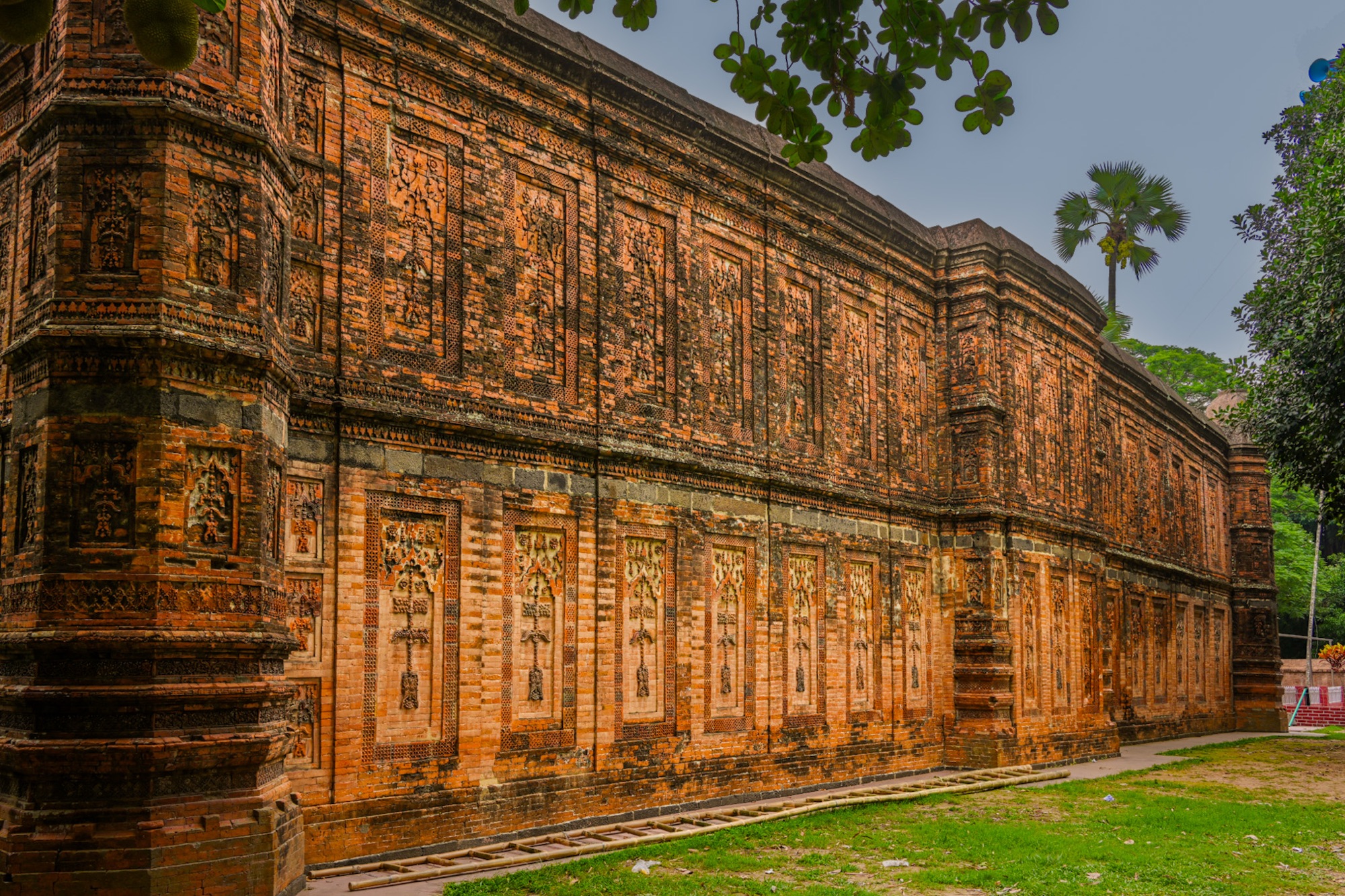
About forty kilometres from Rajshahi city, tucked among mango groves and riverine landscape, stands this mosque — built in 1523, one of the finest examples of terracotta architecture from the Sultanate period.
Across the walls of this ten-domed mosque are countless terracotta panels — flowers, vines, geometric patterns, mythical forms. Each panel different, each one handmade. No haste, no weariness of repetition — only the mark of a sure hand pressed into clay.
This terracotta tradition is Bengal’s own. The hands that worked the temples worked the mosques too. Dynasties change, faiths shift — but the language of clay does not.
Even five hundred years later, standing before that wall, you have to pause. You cannot simply walk away.