
 flic.kr/p/2sd8JmQ
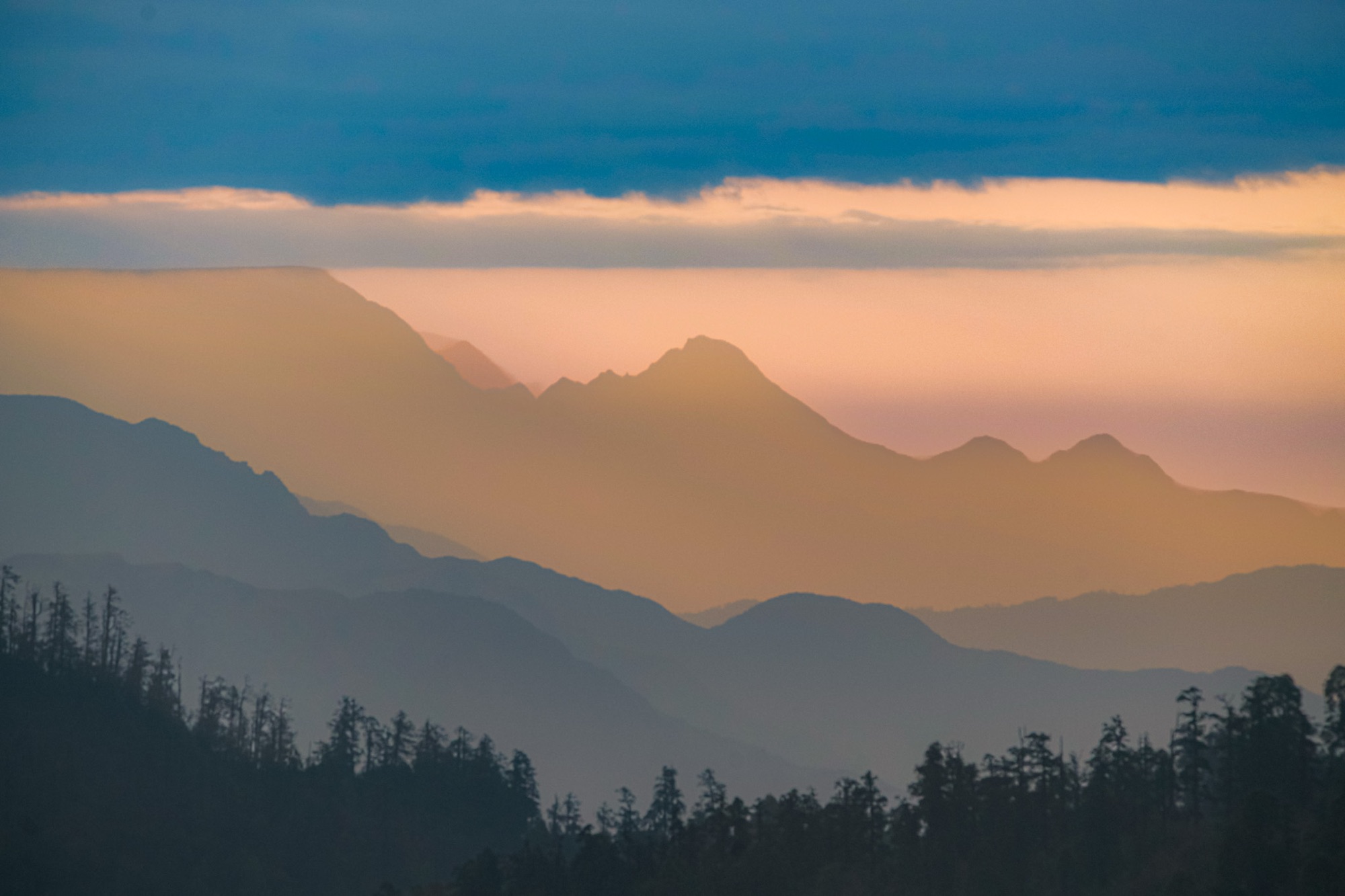
There is a moment before dawn on Poonhill when the mountain does not reveal itself — it merely suggests. Layer by layer, ridge folding into ridge, the Annapurna range assembles itself out of the dark like a sentence being composed slowly, carefully, in a language older than any spoken here.
To reach this moment, you leave before the world is awake. The path is unlit, the cold insistent, the incline steeper than memory prepares you for. Forty-five minutes of climbing in near darkness, each breath visible, each step a small act of faith. No one speaks much on that ascent. The mountain earns its silence.
And then you arrive. And what the light does to the fog is not something you can fully translate into words. The first glow comes not from a direction but from everywhere between the ridges — a warmth pressing through the haze, turning the air amber, then rose, then a quiet gold that holds. The peaks do not announce themselves. They emerge. Each one slightly different in tone, slightly further in recession, the nearest silhouetted in deep charcoal, the furthest barely a whisper of form against the brightening sky.
Above it all, a strip of blue — the particular blue that only exists before the day has fully committed to itself. Cloud rolls in from the west, lit from beneath in tangerine. Below, the forest breathes: conifer and rhododendron, dark and still, keeping their own counsel.
The photograph tries to hold this. It can only hold the light — not the cold, not the silence, not the particular quality of having earned the view by climbing toward it in darkness. That part lives elsewhere. In the body. In the fact of having been there.
Some mornings remind you, quietly and without ceremony, that the planet is still extraordinary.
Poonhill, Ghorepani, Pokhara, Nepal
April 15, 2025
Sony A7R5