
 flic.kr/p/2rVmc8d
Paharpur, Naogaon, Bangladesh on December 28, 2021 with Nikon Z7
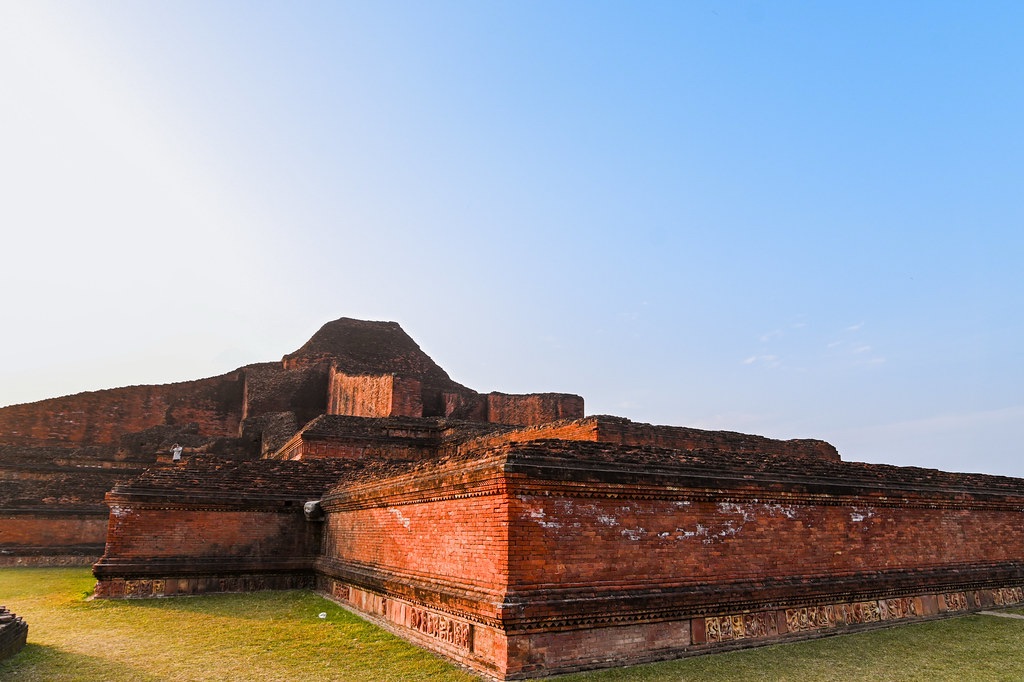
The thousands of terracotta plaques that decorate the walls of Sompura Mahavihara feel like an open window into the life of ancient Bengal. While the stone sculptures at the base of the temple express religious solemnity, the terracotta plaques above were a canvas for local artisans to freely express their imagination and joy.
According to Royal Bengal Tours, these plaques portray not only gods and goddesses but also scenes from everyday life, folk tales, and humorous moments. For pilgrims, they served as a source of both learning and entertainment—turning the entire outer wall into a vast storybook made of clay.
Many of the plaques depict famous animal stories from the ancient Panchatantra. One shows the proud lion preparing to leap into a well after seeing his own reflection—tricked by a clever rabbit. Another portrays tiny mice cutting a rope to free a captured elephant—a timeless lesson in compassion and helping others in need. These plaques were not merely decorative; they conveyed moral teachings that even illiterate visitors could easily understand.
Beyond religious stories, the plaques capture the nature, wildlife, and daily life of the 8th century—like a vivid archaeological record. As described by The Daily Star, they include scenes such as a farmer throwing stones to chase away elephants, a shy woman peeking from behind a window, a mischievous monkey teasing a sleeping lion, and depictions of rhinoceroses, turtles, and the Royal Bengal Tiger. Even semi-divine beings like the Gandharvas are shown enjoying music and dance like ordinary people.
This remarkable blend of sacred symbolism and everyday human life makes Sompura Mahavihara more than just a religious structure—it stands as a human monument to the emotions, beliefs, and lived experiences of ancient Bengal.